Understanding how people decide to trust AI
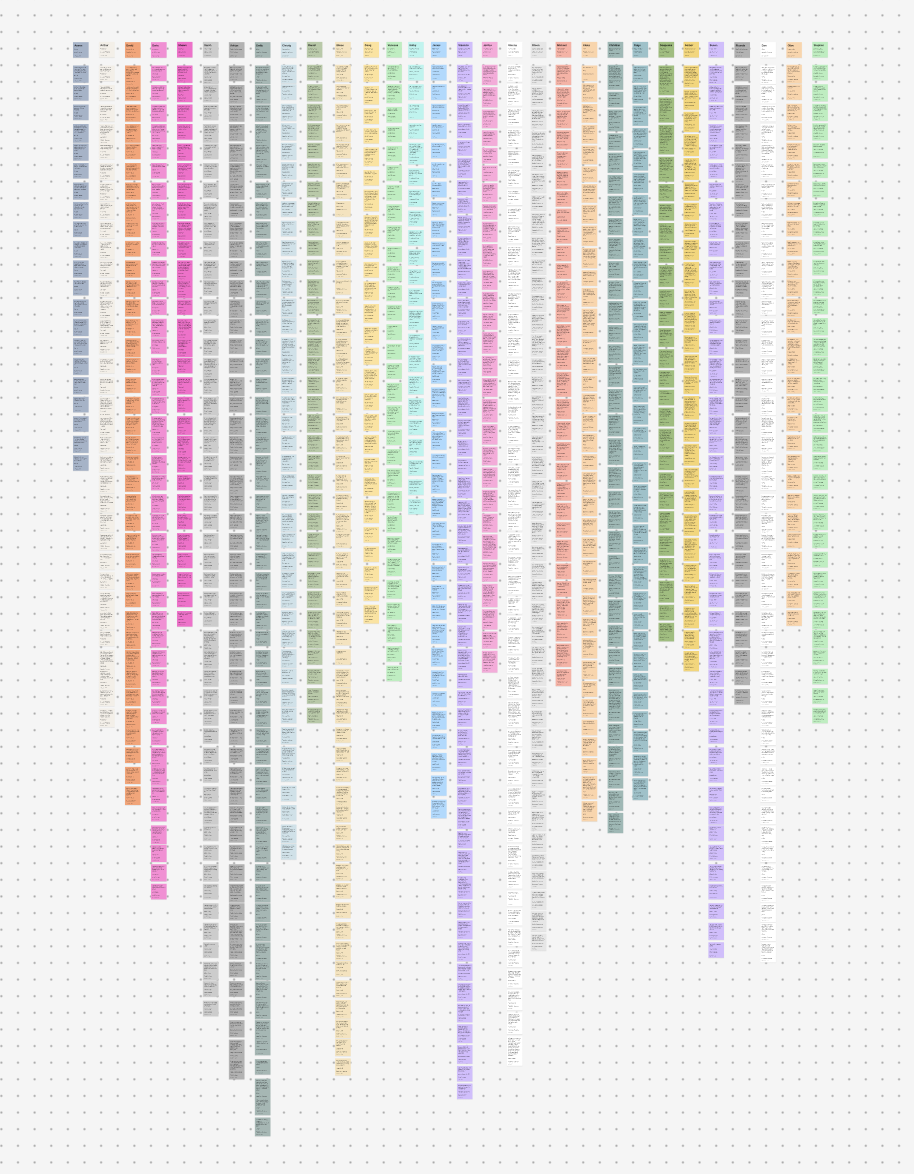
Generative interview raw data
How a leadership workshop, surveys of nearly 3,000 people, and 40 interviews revealed three thinking styles that shape how people approach AI & privacy.
Employer
Vivint
Year
2025-26
Note around findings:
Detailed findings are omitted to protect Vivint's intellectual property. I'm happy to walk through the approach in conversation.
Project background
Vivint was building more AI features when a concept test for a generative AI feature drew strong negative reactions from customers. It exposed a gap: the company lacked a clear understanding of how customers perceive, understand, and trust AI.
I partnered with the AI team on foundational research to guide future AI decisions across the company. The core question: does how people feel about AI predict whether they adopt it? The plan was to start with sentiment and trace it through to real use. I also mentored a junior researcher throughout.
Phase 1 - Cross-Functional Workshop
I ran a cross-functional workshop with leaders from each of Vivint's 4 product verticals, since the AI team worked with each one separately.
With limited time from senior leaders, I designed a focused activity instead of an open discussion: the Impact Canvas. It asked each team to:
Surface the data and assumptions behind their current beliefs about AI and home security
Tie each open question around AI to a real business decision or risk.
Outcome
Tying every question to a decision kept the research focused on what the business needed to know. These questions and assumptions became the building blocks of our research objectives, and the workshop earned buy-in from all four verticals.
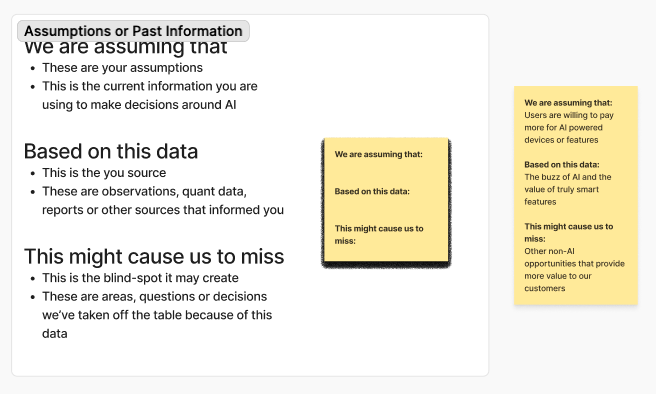
Format used to explore the teams assumptions or past information.
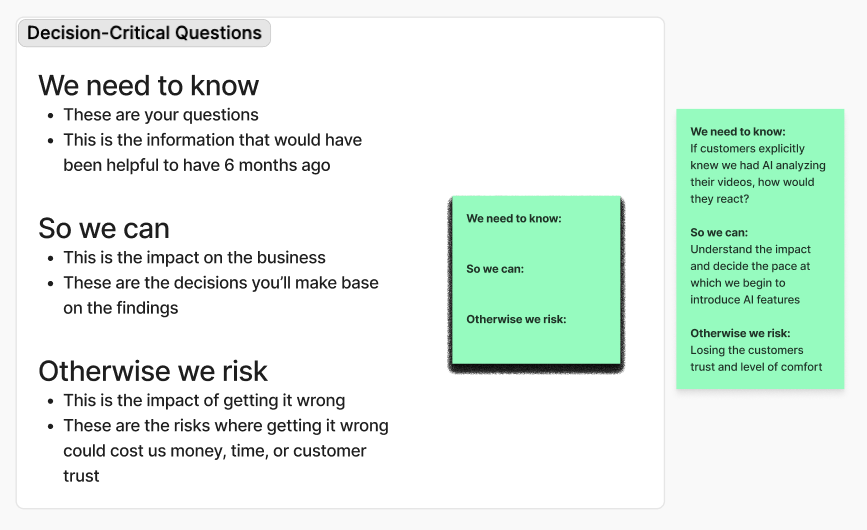
Format used to explore the teams questions.
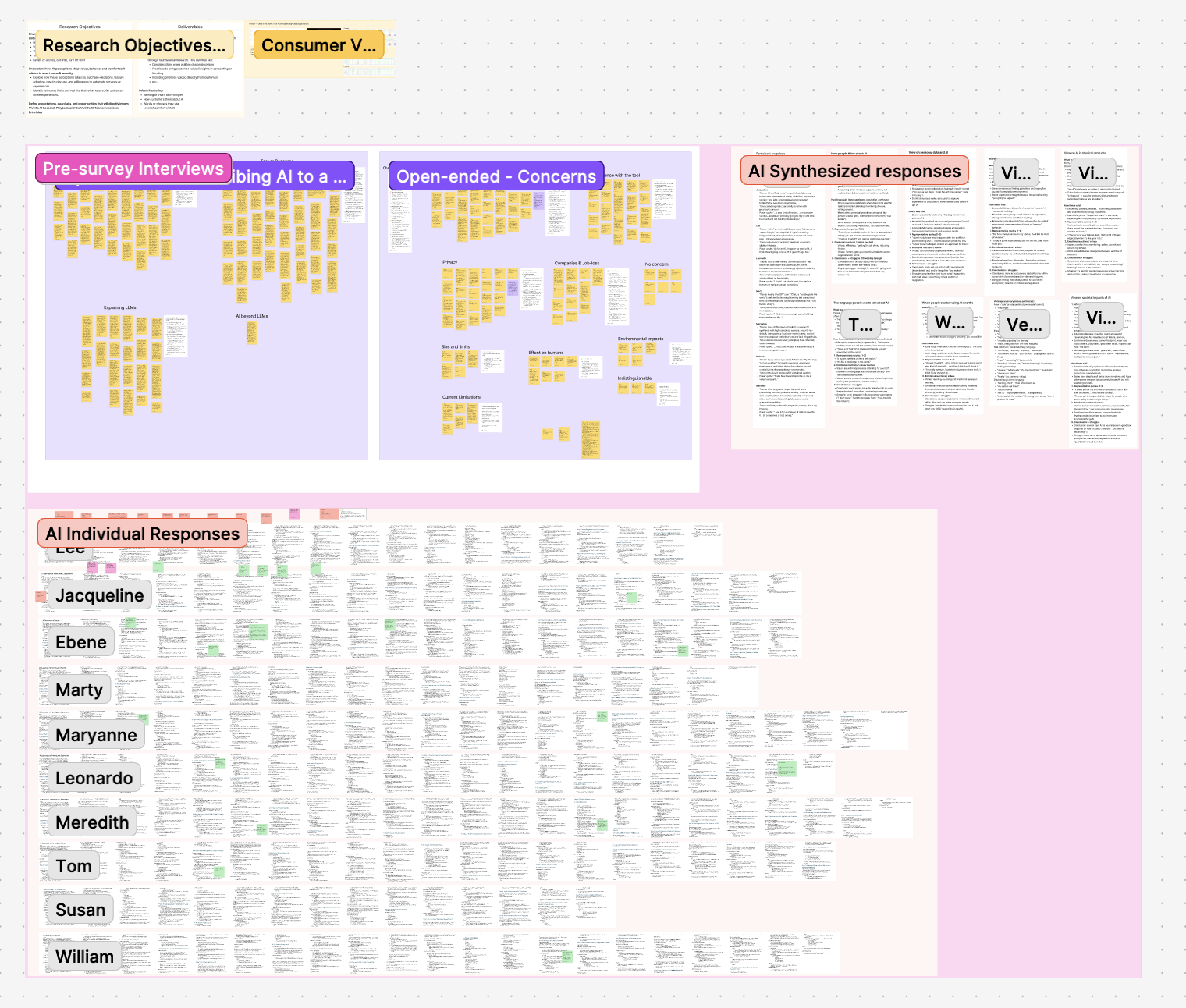
Pre-survey interviews synthesis
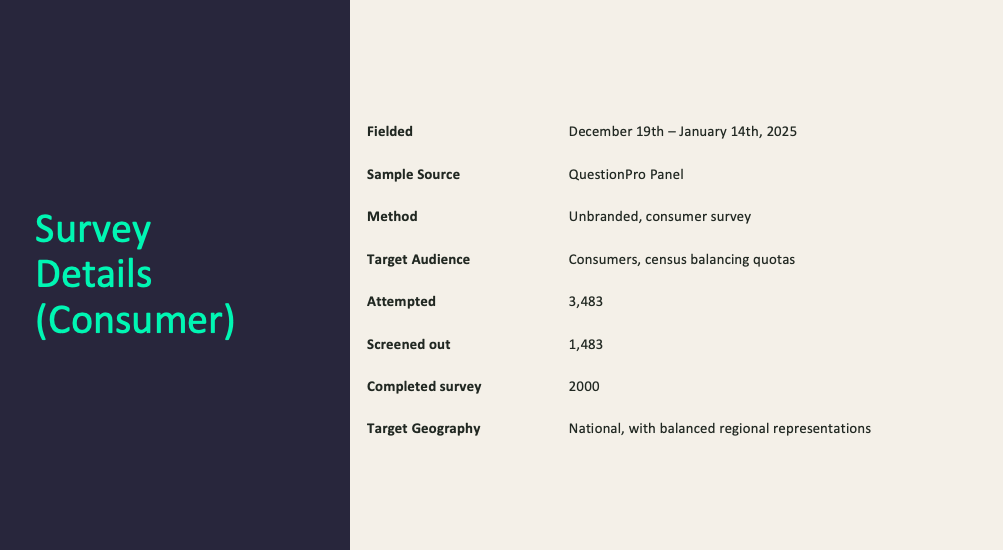
Consumer survey details
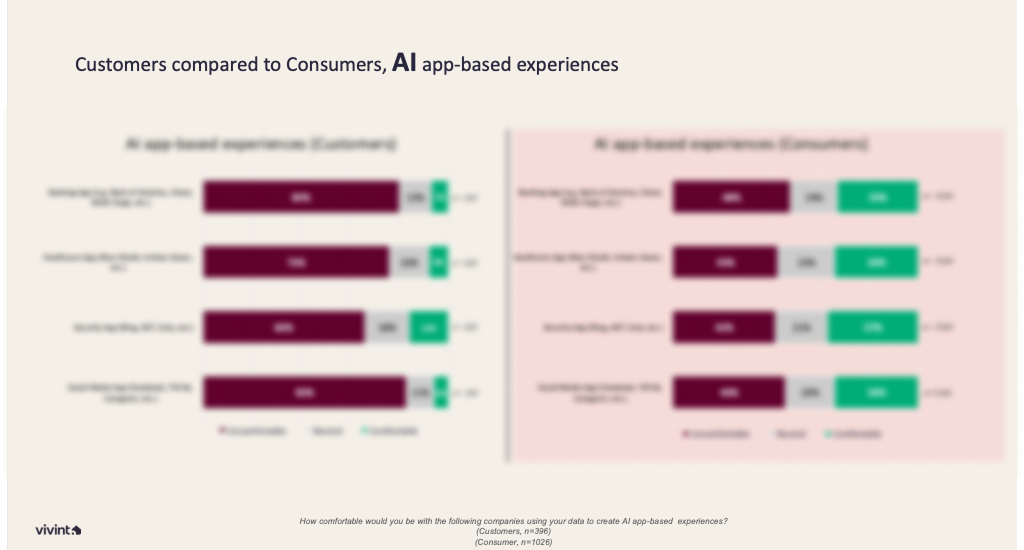
Mirco-readout, comparing consumer and customer data
Phase 2 - Surveys
Pre-survey Interviews
Since the winter holidays were next, we decided to use what would have normally been less active time to field our survey.
To ground the survey in real behavior, I first ran 10 unmoderated interviews to explore:
Current understanding and use of AI, both known and unknown.
Sentiment toward AI across different sectors.
Concerns about AI in technology, and whether they affected adoption or usage.
The interviews uncovered that many people use AI without realizing it. To further explore this finding in the survey, we A/B tested comfort with explicit AI features against lesser-known ones.
Surveys
We surveyed 2,000 U.S. consumers and ~1000 Vivint customers. Vivint offers paid, monitored security, which only represents a small segment of the population. We wanted to explore how, if at all, the ‘security mindset’ affects privacy and AI. Our hypothesis was that we see a stark difference between the two.
The surveys surfaced 3 key findings.
Micro-readout
I presented a micro-readout to the cross-functional team and asked whether there were other cuts of the data or new questions to bring into the interviews.
With that input, the junior researcher and I planned the interviews.
Phase 3 - Mental Model Interviews
Planning
The junior researcher and I decided we wanted to interview 30 people: Vivint customers, competitors' customers, and potential customers.
The goal was to explore how perceptions of AI shape trust, behavior, and comfort in the smart home and security. Our aim was to do it in 2 weeks.
Approach
We borrowed Indi Young's mental model approach, asking participants to walk through real past experiences. That grounded the data in actual decisions and behavior, while avoiding capturing preferences, opinions and conjecture that did may not result in actual adoption, usage, or behavior change.
Analysis
Though our approach was outside the realm of a problem space, we still used Indi Young’s excel based tagging system. This required that we take any inner thinking, emotional response, or guiding principles and put them in summary form.
We tried to get Claude to do this for us (as it is incredibly tedious), but we could not get consistent results.
Synthesis
Once every participant was summarized, we grouped people by how they reasoned. Interviews and synthesis were also where most of my mentoring happened.
Outcome
Synthesis surfaced three privacy thinking styles, the key findings of the project.
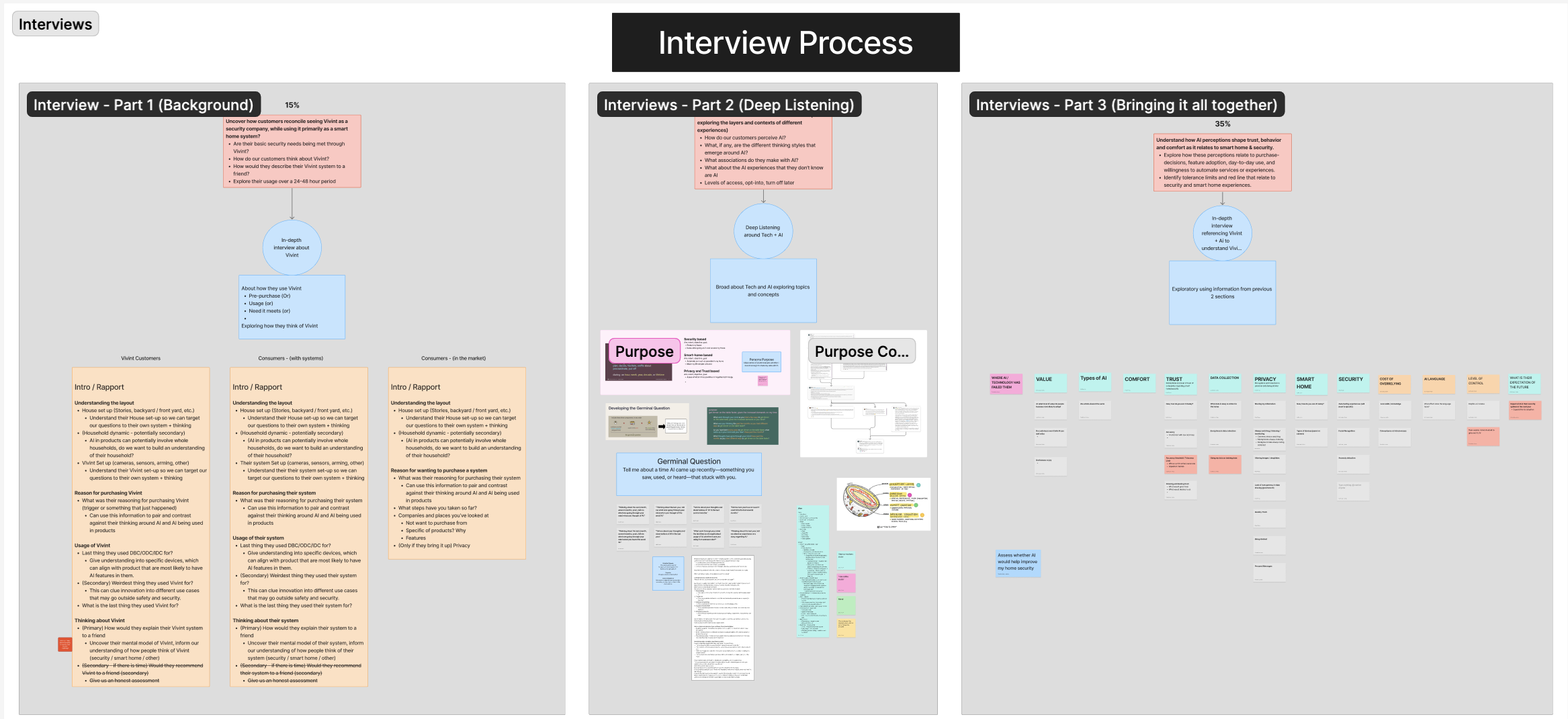
Planning the interview approach and discussion
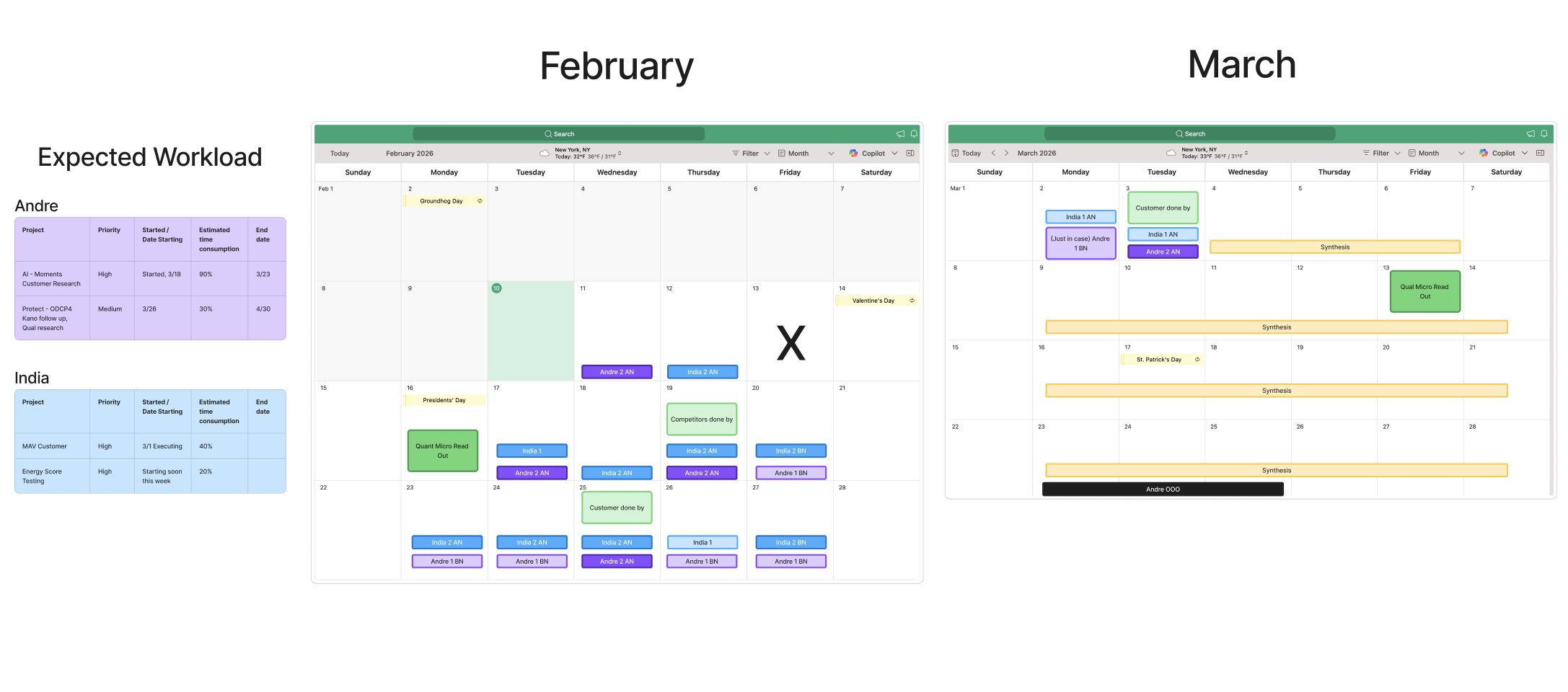
Mapping interviews & synthesis with our expected workload.
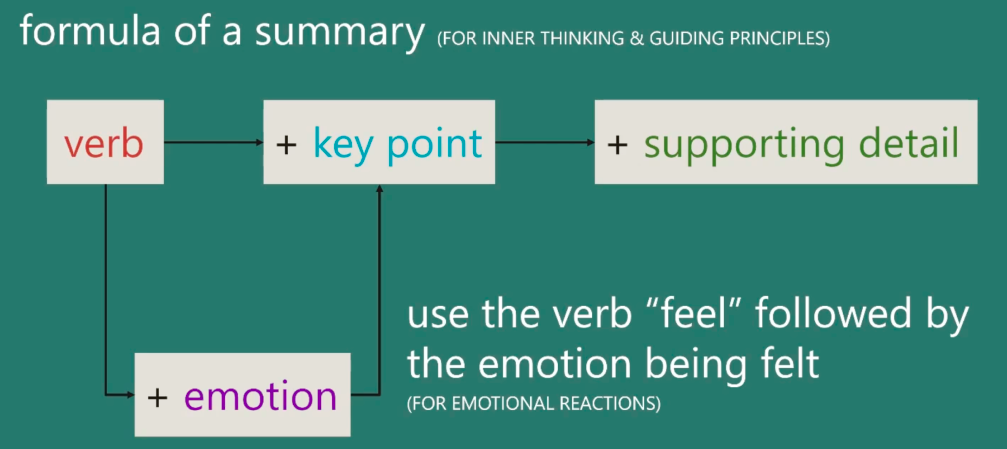
Indi Young’s Summary method for analysis
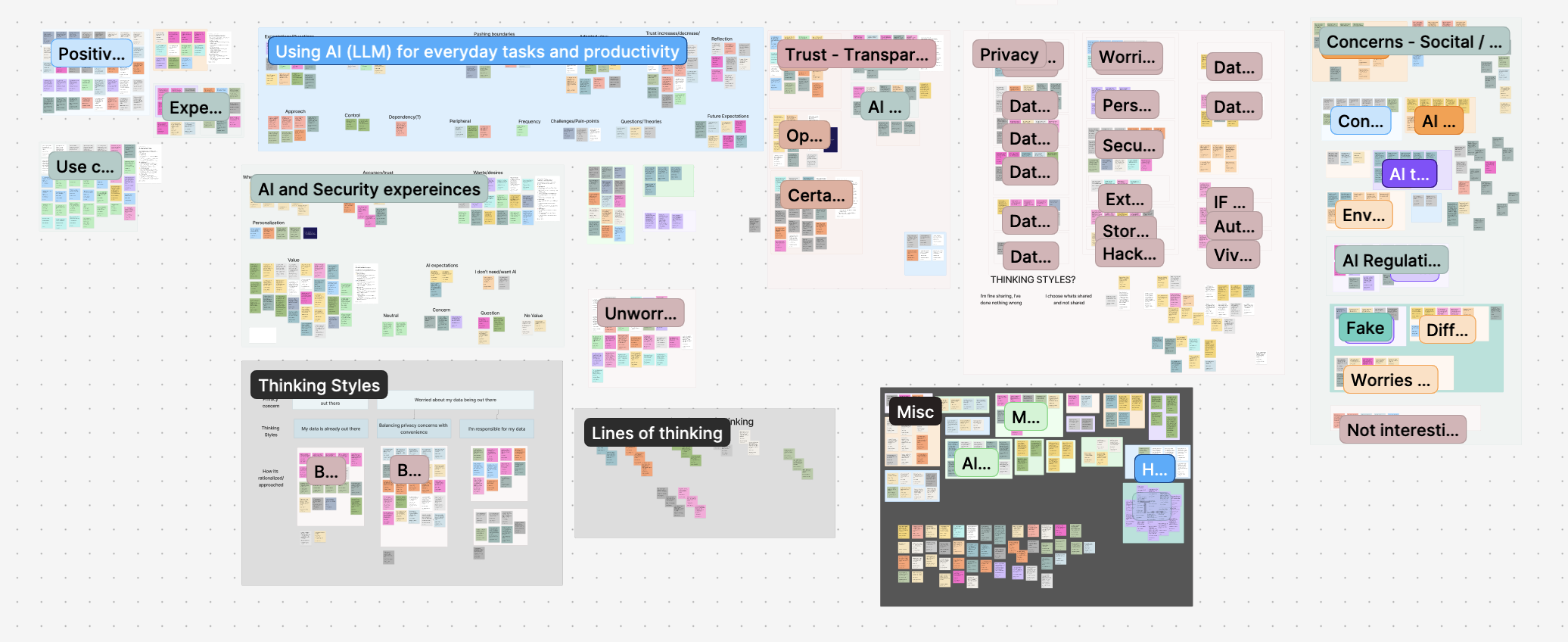
Synthesis work in the Figjam board
Kano follow-up interviews findings
Generative AI fearture testing
Phase 4 - Validating in Real Features
The plan reserved a final phase for AI feature concept tests, to validate the sentiment and thinking styles in practical use. Three evaluative studies were already underway, so we used them instead:
Kano feature testing (run by another researcher)
Kano feature follow-up unmoderated interviews (co-led by me and another researcher)
Moderated concept testing of a generative AI feature (co-led by me and another researcher)
Outcome
These projects began to validate the privacy thinking styles we had formed around technology, tool, and feature adoption.
Deliverables, Impact, and Insight
I presented a final readout with the junior researcher I mentored, tying all four phases into one story about AI, privacy, and trust. It immediately sparked conversations about next steps and how to apply the work.
We also co-authored an executive one-pager, the first of its kind at Vivint. It captured only the most crucial information for designers, PMs, and leadership, plus four recommendations for moving forward with AI in specific areas of the business.
The three thinking styles have since been observed and validated in other work, giving us a reliable starting point whenever new features touch AI and privacy..